Rust's Biggest Cloth Farm Challenge
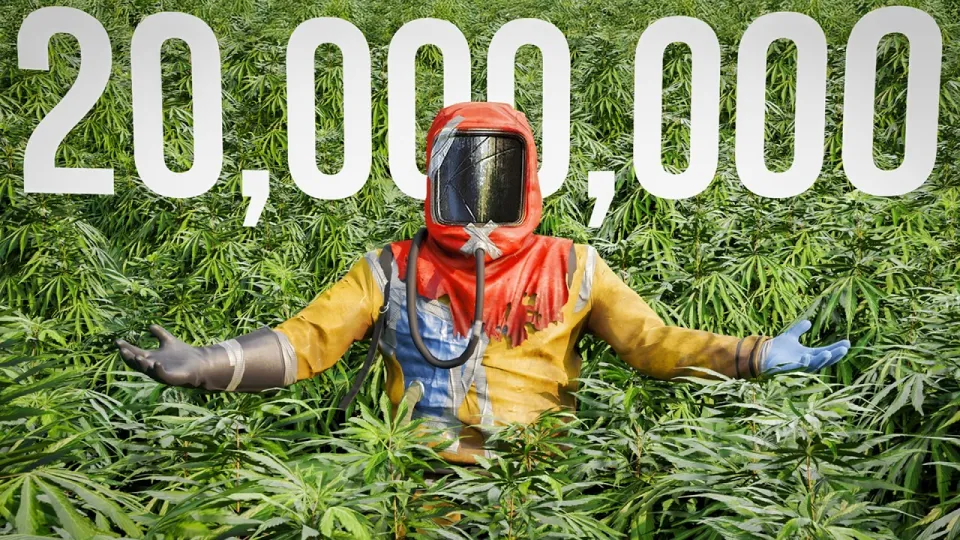
Video: I Became Rust's #1 Farmer...
You can order the same kind of articles for your own video to boost it on YouTube and Google. Just message the Telegram bot @sat_sit_bot. Articles with your video embedded are written and posted by the bot itself — on popular topical sites (no ads). Free trial — 50 articles.
· based on the channel JTeles
Key takeaways
- The goal was to grow 126,000 starting cloth into 20,000,000 cloth within a single wipe.
- The attempt was planned around a 7-day window with viewers invited onto the server to help.
- A large Russian clan learned about the project and tried to stop it with PvP, raids and base defense fights.
- The finished cloth compound was big enough that rendering it reportedly lagged the server.
- Clan members defended the base around the clock, including while the creator was offline and asleep.
Rust's cloth economy rewards players who treat farming as an industrial process rather than a chore, and the most extreme example of that idea is a single-wipe run from 126,000 cloth to 20,000,000. That is the premise of JTeles' cloth farm experiment: invite viewers onto a server, build the largest cloth farm Rust has seen, and hold it for seven days against anyone who wants to tear it down. The attempt is documented in the video I Became Rust's #1 Farmer, and viewers who want to try similar stunts can grab the sponsor offer through the War Thunder free-to-play bonus page linked in the description.
What the 20,000,000 cloth challenge actually involves
The challenge starts from a modest stockpile of 126,000 cloth and treats it as seed capital rather than a finished product. Cloth in Rust comes from hemp plants, which can be grown in planters and harvested for cloth and seeds; scale that up to hundreds of planters and the output becomes a numbers game. Reaching 20,000,000 cloth in one wipe means the farm has to run almost continuously, with planting, watering, fertilizing and harvesting split across many players so that no planter sits idle. The creator's plan relied on a 7-day window and on recruiting viewers as farmhands, which turns a solo grind into a small industrial operation with logistics, storage and defense all at once.
How the biggest cloth farm in Rust was built
Building a farm at this scale is a construction project before it is a farming project. The core requirements are straightforward but demanding:
- Secure a large, flat compound with room for rows of planters and generous storage.
- Wire up irrigation and lighting so planters keep producing around the clock.
- Stockpile fertilizer, water and seeds in quantities measured in thousands, not dozens.
- Assign roles: planters, harvesters, haulers, electricians and defenders.
- Keep the base compact enough to defend but large enough to hit the cloth target before the wipe ends.
The result, according to viewers who watched the build, was a compound so large and densely packed that looking at it reportedly caused server lag. That is a useful benchmark for anyone attempting a mega farm: past a certain size, the base itself becomes a performance problem, and the layout has to be optimized as much as the farming loop.
The clan war over the cloth farm
A project this visible does not stay secret. A large Russian clan found out what was being attempted and set out to stop it, which pushed the run into full-scale conflict. The defense took the familiar Rust shapes: PvP fights around the compound, raids on farm infrastructure, base defense at odd hours and alliances with other groups on the server. Because the farm had to keep producing during the fighting, the crew could not simply turtle up; every hour spent defending was an hour of lost harvest, and every planter destroyed was a setback measured in thousands of cloth. The scale of the opposition is what makes the story notable: this was not a random grudge but a coordinated effort to end the project.
Teamwork, offline defense and the real MVP question
A solo player cannot run a farm of this size, and the run depended heavily on the crew recruited from the audience. The most demanding part was coverage while the creator was offline: clan members held the base, repaired damage and kept the planters running through the night. That kind of shift work is the unglamorous core of any large Rust operation, and it is why the crew, not the cloth count, is often what viewers remember. For anyone planning a similar project, the lesson is that recruitment, trust and clear roles matter more than the planter blueprint.
Is a mega farm like this realistic for regular players?
A 20,000,000 cloth target is an outlier, but the method scales down. Experienced farmers report that even without automation, large planter arrays pay off: one player described hand-planting and hand-harvesting a 1,008-planter farm on a 5x server, which took about three hours to plant and three hours to harvest and yielded roughly 17.4 million cloth. On vanilla rates the same approach is slower and more vulnerable, so the practical advice is to start with a few dozen planters, learn the watering and fertilizer rhythm, and only expand once storage and defense can keep up. The main risks are the same at any scale: raids, server performance and burnout from repetitive harvesting.
All links from the video
- War Thunder free-to-play offer for PC and consoles
- War Thunder mobile offer
- JTeles Discord community
- JTeles on Twitter/X
- JTeles on TikTok
Final thoughts on Rust's cloth farming record attempt
The run from 126,000 to 20,000,000 cloth is a good illustration of what separates a big Rust farm from a serious one: planning, manpower and the willingness to defend infrastructure while it works. JTeles turned a farming grind into a server-wide conflict, and the video breakdown covers the build, the clan war and the offline defense shifts that held it together. Players who want to chase their own farming goals can start with the War Thunder sign-up offer from the description, then plan their planter layout before the next wipe. The full story is on the JTeles channel, where the cloth farm experiment sits alongside his other Rust projects.
Source: I Became Rust's #1 Farmer... · Markdown version
Questions & answers
How much cloth do you need to become Rust's #1 farmer?
In this run the target was 20,000,000 cloth in a single wipe, starting from 126,000 cloth. That figure is far beyond normal farming needs and was chosen as a record attempt rather than a practical goal. Most players will never need more than a fraction of that for crafting.
How long does it take to build a large cloth farm in Rust?
A mega farm is a multi-day project that includes construction, wiring, irrigation and stockpiling supplies before harvesting even starts. In this attempt the whole run was planned around a 7-day wipe with viewers helping. Smaller planter setups can be running within a few hours on a fresh wipe.
Why did a clan attack the cloth farm?
A large Russian clan discovered the scale of the project and tried to stop it, which led to raids, PvP and base defense fights. Large, visible compounds attract attention because they hold valuable loot and resources. Defending a farm of that size requires constant coverage, including while the owner is offline.
Can a solo player farm millions of cloth?
It is possible but slow, especially on vanilla rates, and one player reported hand-planting and harvesting 1,008 planters for about 17.4 million cloth over roughly six hours of work on a 5x server. Solo farmers usually scale down to a few dozen planters to keep maintenance and defense manageable. A crew makes large farms far more reliable.